
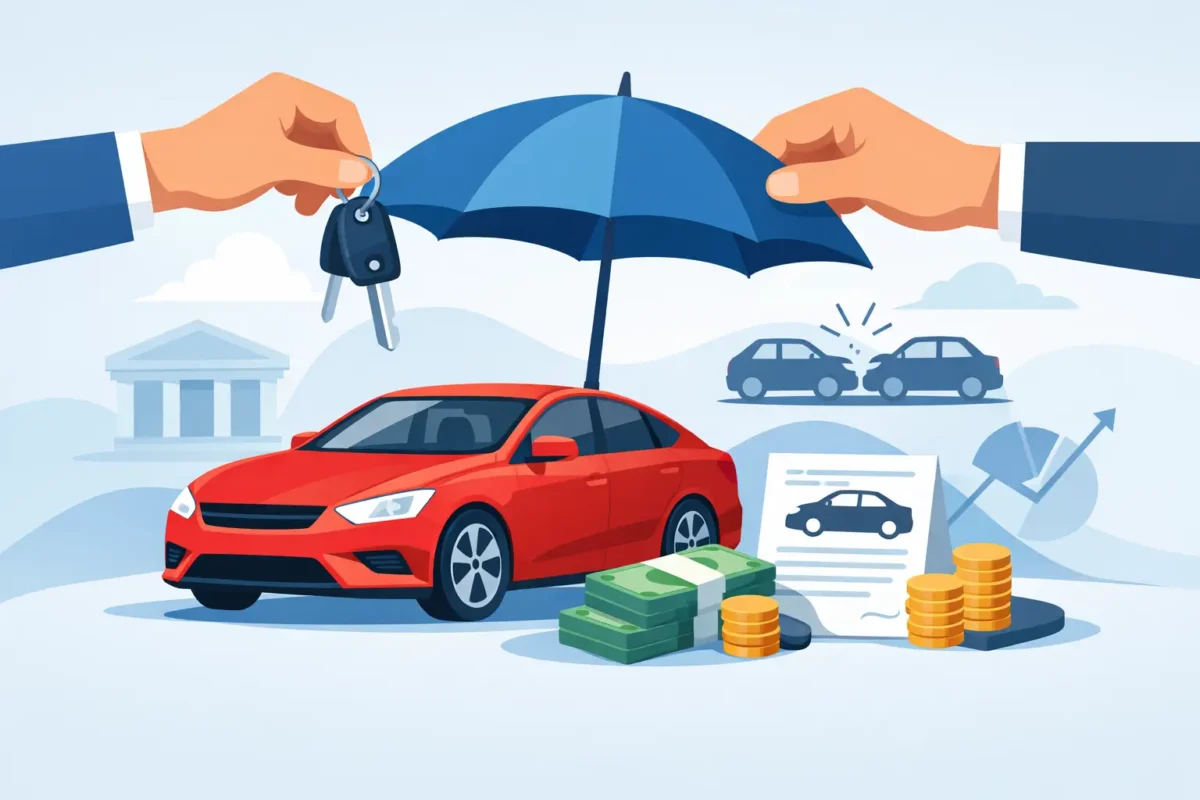
You can do everything right with your car loan and still owe more than the vehicle is worth. That is exactly why gap coverage for financed car loans gets so much attention. If your vehicle is totaled or stolen, standard auto insurance usually pays the car’s actual cash value, not the full amount left on your loan. The gap between those two numbers can become your problem fast.
For many drivers, that is not a small difference. New cars can lose value quickly, and even used cars can depreciate faster than expected depending on mileage, market conditions, and the terms of the loan. If you financed with a small down payment, rolled taxes or fees into the loan, or chose a longer repayment term to keep monthly payments lower, the risk of being upside down is higher.
What gap coverage for financed car loans actually does
Gap coverage is designed to help cover the difference between what your insurance company pays after a total loss and what you still owe on your auto loan. It does not replace full coverage auto insurance. Instead, it works alongside it.
Here is the basic scenario. Say your car is totaled in an accident. Your insurer determines the vehicle’s actual cash value is $24,000. But your loan balance is still $28,500. Without gap coverage, you may have to pay that $4,500 difference out of pocket, even though you no longer have the car. With gap coverage, some or all of that shortfall may be covered, depending on the terms of the policy or waiver.
That can be a major relief when money is already tight. A total loss is stressful enough. The last thing most borrowers want is to keep making payments on a vehicle they cannot drive.
When gap coverage makes the most sense
Gap coverage is not automatically right for every financed vehicle. It tends to be most valuable when your loan balance is likely to stay above the car’s market value for a while.
You may want to take a closer look if you bought a new car, made a down payment of less than 20%, financed for 60 months or longer, or traded in a vehicle with negative equity that got added to the new loan. The same goes if your vehicle model tends to depreciate quickly.
This is where the math matters more than the sales pitch. If you are early in the loan and your payoff amount is noticeably higher than what your car would likely sell for today, gap coverage may be a smart layer of protection. If you are several years into the loan, have strong equity, or could comfortably absorb the difference yourself, it may be less necessary.
When it may not be worth the extra cost
If your loan balance is already below the value of the car, gap coverage may not give you much benefit. The same is true if you made a large down payment and chose a short loan term. In those cases, depreciation is less likely to put you underwater.
Budget matters too. If the cost is being added to your financing, remember that you may also pay interest on it over time. A product that looks inexpensive upfront can cost more when rolled into the loan. That does not mean it is a bad choice. It just means the real cost should be clear before you say yes.
There is also a timing issue. Gap coverage is often most useful in the early and middle stages of a loan, when the balance is still high. Later on, its value can fade as you build equity. That is why a one-size-fits-all answer does not work here.
What gap coverage usually pays for and what it does not
This part is where many buyers get tripped up. Gap coverage helps with the difference between the insurance settlement and the remaining loan balance, but it usually does not cover everything tied to your loan.
Depending on the agreement, it may not pay for missed payments, late fees, extended warranties, service contracts, rollover balances beyond certain limits, or your deductible. Some plans do include deductible assistance, but not all of them. Coverage terms vary, and the details matter.
That is why the best question is not just, Do I have gap coverage? It is, What exactly does my gap coverage include? A quick review now can prevent an expensive surprise later.
Gap insurance vs. gap waiver
You may hear these terms used like they mean the same thing, but they are not always identical. Gap insurance is typically offered through an insurance company. A gap waiver is often offered by the lender or dealership and waives part of the loan deficiency after a covered total loss.
From a borrower’s point of view, both are aimed at solving the same problem. The difference is in how they are structured, regulated, priced, and administered. That is one reason comparing offers matters. You are not just comparing cost. You are comparing how the protection works.
How to decide if you need gap coverage for financed car protection
Start with your current loan balance. Then estimate your car’s actual market value. If there is a meaningful shortfall, ask yourself one practical question: if the car were totaled this month, could you comfortably pay that difference out of pocket?
If the answer is no, gap coverage deserves serious consideration. It can protect savings, reduce financial shock, and keep one bad event from turning into a bigger debt problem.
You should also look at the terms of your financing. Longer loans often create more room for negative equity, especially in the first few years. If lowering your monthly payment meant stretching out your term, adding gap coverage may be one way to balance that risk.
And if you are refinancing, this is a good time to review your protection options. A refinance can improve your payment or rate, but it is also a chance to look at the full picture – loan terms, vehicle value, and whether your current protection still fits. Companies like OpenRoad Lending often help borrowers think through both the financing side and optional protection products together, which can make the decision easier.
Common mistakes to avoid
One common mistake is assuming full coverage auto insurance automatically handles the whole loan. It does not. Full coverage helps pay for the value of the vehicle, not the amount you still owe.
Another mistake is buying coverage without checking exclusions. If you do not know whether your deductible is covered or whether certain financed add-ons are excluded, you may overestimate the protection.
The third mistake is keeping coverage without reviewing whether you still need it. As your loan balance drops, the value of gap coverage can change. It is worth revisiting from time to time, especially after refinancing or making extra payments.
Questions worth asking before you add it
Before agreeing to gap coverage, ask how much it costs, whether it is a one-time fee or monthly charge, whether it is refundable if canceled early, and what exactly is excluded. Also ask whether the amount is being financed into your loan.
Those questions are not nitpicking. They are the difference between buying useful protection and paying for something that does not fit your situation.
The real value comes down to risk
Gap coverage is not exciting. It does not lower your rate, cut your payment, or improve your car. What it can do is protect you from a very specific financial hit at a time when you are least likely to want one.
For some drivers, that makes it an easy yes. For others, it is an unnecessary extra. The right answer depends on how much you owe, how fast your car is depreciating, and how much risk you are comfortable carrying on your own.
If you are financing a vehicle and your loan balance is still ahead of its value, gap coverage can buy peace of mind in a way few add-ons do. Take a few minutes to run the numbers now, while you still have options.