
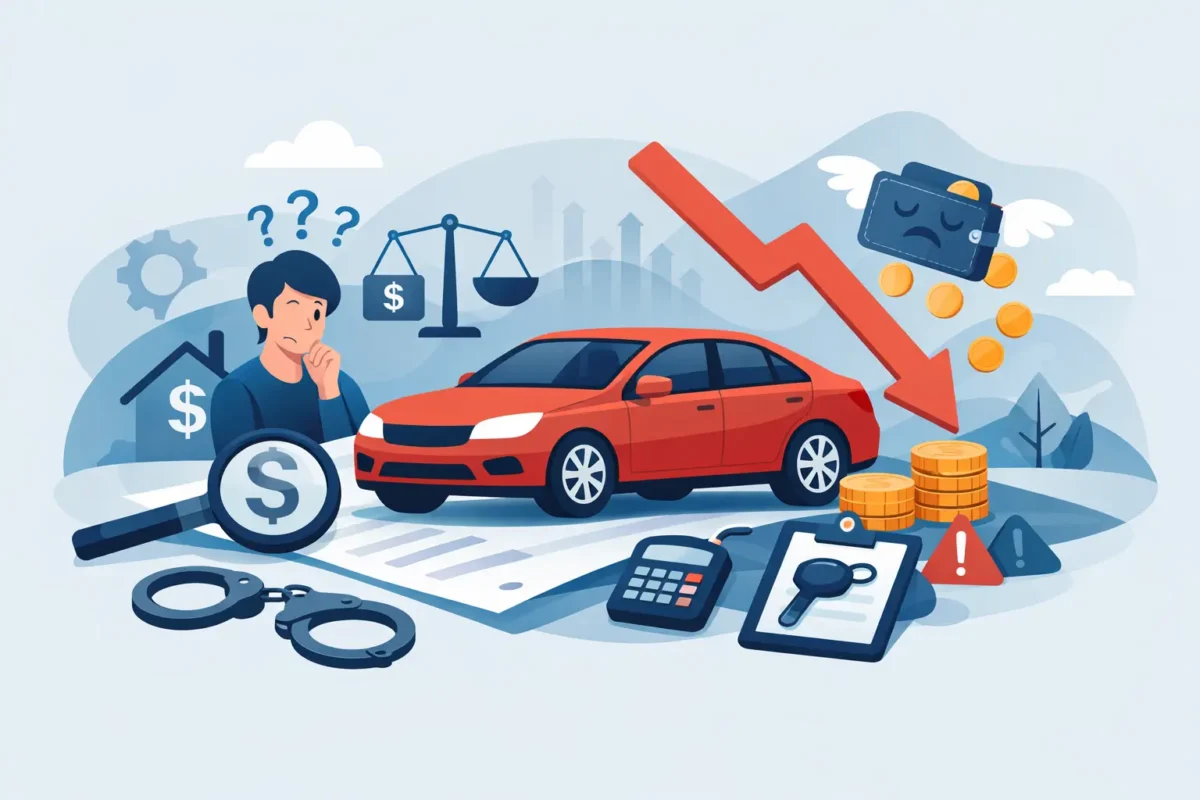
That monthly car payment can look normal right up until you compare it with what other drivers are paying. One of the top signs your car loan is overpriced is simple: the numbers no longer make sense for your budget, your credit, or your vehicle.
An overpriced car loan does not always mean you made a bad decision. Sometimes rates were high when you bought. Sometimes the dealer structured the loan to hit a payment target instead of a better total cost. And sometimes extra products or fees got folded into the financing without a clear picture of how much they would add over time. The good news is that a costly loan is often fixable.
Top signs your car loan is overpriced
The clearest warning sign is that your interest rate seems high compared with where your credit stands today. If your credit score has improved since you took out the loan, or if market rates have dropped, your current APR may be costing you more than necessary. Even a few percentage points can add up to hundreds or thousands of dollars over the life of the loan.
Another common sign is that your monthly payment feels heavy even though your vehicle is modestly priced. A manageable car payment should still leave room for the rest of your life – rent or mortgage, groceries, insurance, and savings. If your payment keeps squeezing your budget month after month, that is worth a closer look. In some cases, the issue is not the car itself. It is the loan structure.
Loan length matters here. If you are paying on a 72-, 78-, or even 84-month term, the payment may look lower on paper, but the total amount you repay can be much higher. Long terms are not automatically wrong. They can help in certain situations. But if the rate is high and the term is long, you may be paying a premium for convenience.
You do not know your total loan cost
If you can name your monthly payment but not your APR, total finance charges, or payoff amount, that is a red flag. Overpriced loans often hide behind affordable-looking monthly numbers. Dealers and lenders know most shoppers focus on payment first.
The better question is this: how much will this loan cost from start to finish? If that number surprises you, your financing may be working against you. A loan can seem reasonable at $425 a month, then turn out to cost several thousand more than expected once interest and fees are added up.
This is especially true if you rolled other balances into the loan, such as negative equity from a previous vehicle. That can happen when you owe more on your trade-in than it is worth. The new loan absorbs that gap, and suddenly you are financing more than the current car alone.
Your APR is much higher than average for your profile
A high APR is one of the top signs your car loan is overpriced, but high compared with what? It depends on your credit history, income, loan amount, vehicle age, and when you financed. A borrower with challenged credit will usually see a higher rate than someone with excellent credit. That part is normal.
What is not normal is staying stuck with an old rate after your financial picture improves. If you have made on-time payments, reduced debt, or increased your income, you may qualify for better terms than you had when you first signed. Many drivers never revisit their auto loan after purchase, even when their credit profile is stronger.
You do not need perfection for refinancing to make sense. You just need a realistic chance to improve the rate, payment, term, or all three.
Too much of your payment goes to interest
Early in a loan, a bigger share of each payment usually goes toward interest. That is standard amortization. But if you have been paying for a while and your balance still barely moves, your loan may be too expensive.
Check a recent statement and look at how much of your payment is reducing principal. If the balance feels stubbornly high after years of payments, you may be carrying a rate or term that is draining value out of every month. This can be frustrating when you want to build equity in the vehicle or trade it in later.
A slow-moving balance also makes it easier to become upside down on the loan, especially if the car depreciates faster than expected.
You financed extras you did not fully understand
Many auto loans include more than the car price. Taxes, title fees, service contracts, GAP coverage, maintenance plans, credit insurance, and dealer add-ons can all be bundled into the financing. Some products can be useful. The problem is not that extras exist. The problem is paying for them without clearly understanding the cost or whether they fit your needs.
When these items are financed, you pay interest on them too. That means a $1,500 add-on does not cost $1,500 in the end. It costs more over time. If you review your paperwork and realize the amount financed is much higher than the vehicle price plus standard fees, it is worth digging deeper.
This is also where trade-offs matter. Some protection products provide real peace of mind. But they should be intentional purchases, not expensive surprises buried in the contract.
Your loan balance is far above the car’s value
If you owe much more than your car is worth, your loan may be overpriced or overloaded. Sometimes that gap comes from depreciation alone. New vehicles tend to lose value quickly in the first few years. But a large mismatch can also point to a high rate, a long term, rolled-in negative equity, or too many financed extras.
Being upside down limits your options. It can make selling or trading the vehicle harder, and it can leave you exposed if the car is totaled and you do not have enough coverage to bridge the gap.
A high balance relative to value does not always mean refinancing will solve everything immediately. If the loan-to-value ratio is too high, eligibility may be limited. Still, understanding the gap is an important step toward making a smarter next move.
You feel pressured to keep the loan because changing it sounds complicated
An overpriced loan often stays in place for one reason: people assume fixing it will be a hassle. Paperwork, credit checks, uncertainty, and time all feel like barriers when life is already busy.
But convenience should not keep you trapped in costly terms. If refinancing can lower your payment or reduce your rate, a short application can be worth it. The right process should be straightforward, transparent, and fast enough to fit into a normal day. That is exactly why many drivers look at lenders like OpenRoad Lending when they want to see if a better offer is available without adding more stress.
What to do if these signs sound familiar
Start with your current loan statement. Look at your APR, remaining balance, monthly payment, and months left on the term. Then compare that with your current credit standing and what kind of payment would actually help your budget breathe.
Next, review your original contract if you have it. Check whether extra products were financed and whether your amount financed was higher than the vehicle price you expected. If you traded in another car, confirm whether negative equity was rolled into the new loan.
Then ask a practical question, not just a financial one: would a lower rate, lower payment, shorter term, or different mix of those outcomes improve your life right now? For some borrowers, the biggest win is monthly cash flow. For others, it is paying less interest overall. It depends on your priorities.
If the numbers point to overpaying, refinancing may be the cleanest path forward. A better loan can reduce monthly pressure, help align your payment with your current budget, and put you back in control of the total cost of your vehicle.
A car loan should support your life, not drag on it every month. If your payment feels too high, your rate looks outdated, or your total loan cost keeps raising questions, trust that instinct and take a closer look. A few minutes spent reviewing your loan today could lead to meaningful savings for months or years ahead.