
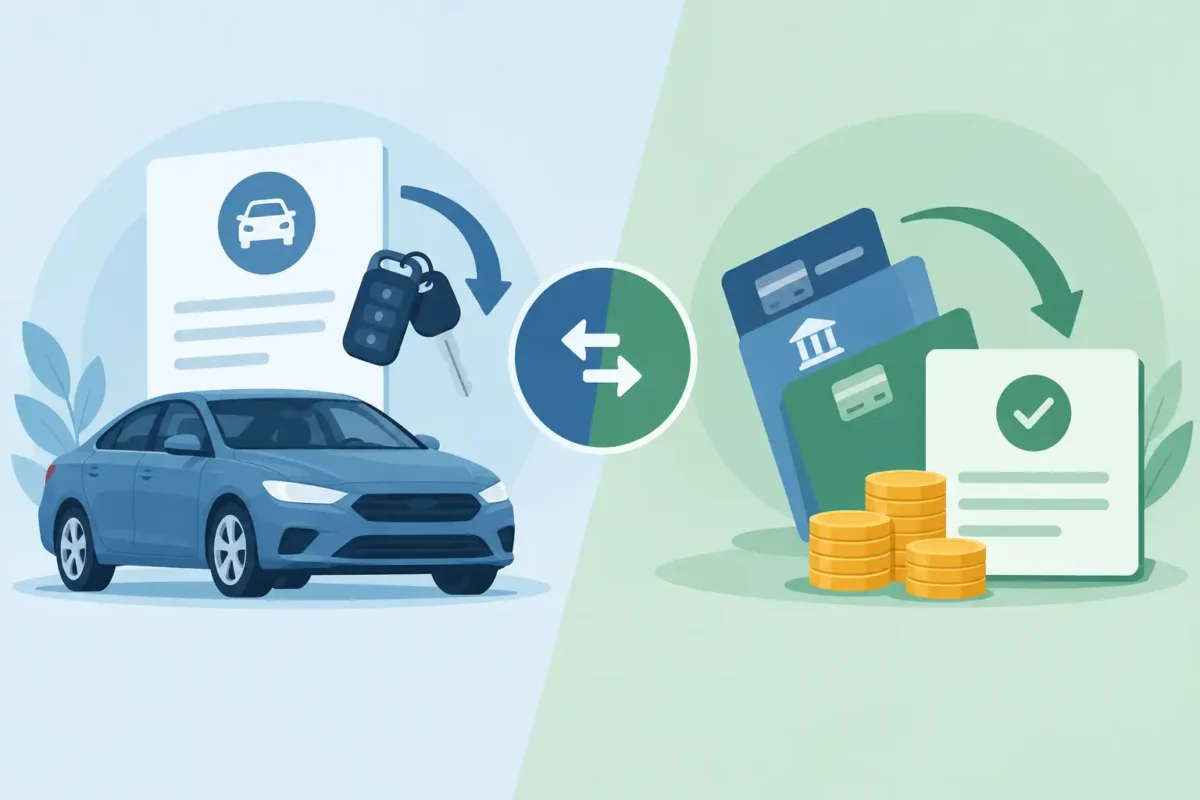
A car payment can take a big bite out of every paycheck, especially when it comes with a rate or term that no longer fits your budget. When comparing auto refinance vs debt consolidation, the right choice depends on the debt creating the most pressure. Both may lower your monthly obligations, but they work in very different ways.
Auto refinancing focuses on one loan: your existing vehicle loan. Debt consolidation combines multiple debts, often credit card balances, into one new payment. Understanding that difference can help you choose a path that provides real relief without creating a more expensive problem later.
What Is the Difference Between Auto Refinancing and Debt Consolidation?
An auto refinance replaces your current car loan with a new loan. The new lender pays off the old lender, and you begin making payments under the new terms. If you qualify for a lower interest rate, a different repayment term, or both, refinancing may reduce your monthly payment or the total interest you pay over time.
Debt consolidation usually means taking out one new loan to pay off several existing balances. Those balances might include credit cards, personal loans, medical bills, or other unsecured debt. Instead of managing multiple due dates and interest rates, you make one payment to the consolidation lender.
The key point is simple: refinancing your auto loan does not automatically consolidate your other debt. It is designed to improve the financing on your vehicle, not pay off credit cards or other bills.
How auto refinancing works
Your car serves as collateral for an auto refinance loan. Because the lender has a secured asset, auto loan rates can be lower than rates on unsecured products such as credit cards or personal loans, depending on your credit profile, vehicle, income, and loan details.
A refinance can be especially useful if your credit has improved since you financed the vehicle, market rates have changed, or you accepted a high rate because you needed a car quickly. You may also choose a longer term to reduce the amount due each month. That can create more breathing room in your budget, although it may increase the total interest paid if you keep the loan for the full term.
How debt consolidation works
With debt consolidation, the goal is usually to simplify high-interest debt. For example, someone making separate payments on three credit cards may replace those balances with one personal loan payment. If the new loan has a lower rate and a clear payoff schedule, consolidation can make repayment easier to manage.
That said, a lower payment is not always the same as lower cost. A consolidation loan that stretches repayment over several years could cost more overall, even if its monthly payment looks appealing. Fees, promotional rates, and the temptation to run credit card balances back up can also change the outcome.
Auto Refinance vs Debt Consolidation: Compare What Matters
The best option is the one that addresses the specific debt problem in front of you. Start with the payment you want to change, then look beyond the monthly number.
Monthly payment relief
If your car payment is the strain on your budget, auto refinancing is the more direct option. A lower rate or longer term may bring that payment down, freeing up money for groceries, utilities, savings, or other priorities.
If several credit card payments are making it hard to keep track of due dates, debt consolidation may offer more immediate organization. One payment can be easier to plan around than several minimum payments with different rates and deadlines.
Interest rate and total cost
Refinancing can lower the cost of your auto loan when you qualify for a better rate and avoid extending the term too far. Review the annual percentage rate, the new loan term, and the total amount you would repay – not just the payment shown on the offer.
Debt consolidation can save money when the new loan rate and fees are meaningfully better than the rates on your existing debts. Credit card interest is often expensive, so replacing revolving balances with a structured installment loan may help. But a longer repayment period can reduce or erase those savings.
Credit and borrowing requirements
Both options generally involve a lender reviewing your credit, income, and existing obligations. Better credit can improve the terms available, but you do not need perfect credit to explore your options. Lenders also consider factors such as your payment history, debt-to-income ratio, vehicle age, mileage, and the remaining balance on your current auto loan.
Applying for a new loan may result in a hard credit inquiry, depending on the lender and application process. Ask how a lender handles credit checks before applying, especially if you are comparing offers. Taking time to understand the process can help you shop more confidently.
When Auto Refinancing May Be the Better Move
Auto refinancing may make sense when your vehicle payment is higher than it needs to be and you want to keep your car. You might be a strong candidate if your credit profile has improved, your current rate is high, or your loan was set up with terms that no longer match your financial situation.
It can also be a practical choice when you need monthly cash flow but do not want to take on a new unsecured loan. Lowering one major fixed payment can make a meaningful difference for a working household, particularly when other expenses have risen.
Still, review the full terms carefully. Extending a loan can lower the payment while keeping you in debt longer. If you owe more than the vehicle is worth, refinancing options may be more limited. And if your current loan has a prepayment penalty, factor that cost into your decision.
When Debt Consolidation May Be a Better Fit
Debt consolidation may be worth considering when high-interest credit cards or multiple unsecured balances are the larger issue. It can provide structure if you are tired of juggling several payments and want a defined payoff date.
For consolidation to work well, the new loan should be part of a plan. That means making the new payment on time and avoiding new balances on the credit cards you paid off. Without that second step, it is possible to end up with both a consolidation loan and fresh credit card debt.
Debt consolidation is not automatically better because it combines payments. Compare the interest rate, origination fees, monthly payment, total repayment amount, and loan length before deciding.
Could You Refinance Your Car and Consolidate Debt?
In some situations, doing both may be reasonable. For example, refinancing an expensive auto loan could lower your monthly car payment, while a separate consolidation loan could simplify high-interest credit card debt. Together, those changes may create a more manageable budget.
But taking on two new loans at once is not the right answer for everyone. Your income needs to support both payments, and each loan should solve a clear problem. If the combined payments are still too high, adding new financing may only delay the pressure.
Four Checks to Make Before You Apply
Before choosing between an auto refinance and a debt consolidation loan, take a few minutes to review the numbers that matter most:
- Check your current balances, rates, monthly payments, and payoff dates.
- Compare the new payment with the total amount you would repay over the full loan term.
- Look for fees, including origination fees, title fees, or prepayment penalties.
- Build a realistic monthly budget so you know whether the new payment truly fits.
A loan should make your finances easier to manage, not simply move the due date. If a lower monthly payment comes from adding years to repayment, decide whether that trade-off is worth it for your household.
Choose the Option That Targets Your Biggest Expense
If your vehicle loan is the payment holding your budget back, auto refinancing may be a focused way to pursue a better rate, lower payment, or more workable term. If multiple high-interest balances are causing the problem, debt consolidation may offer a clearer repayment path.
Start with the debt you want to improve and request terms you can evaluate side by side. OpenRoad Lending helps eligible vehicle owners explore refinancing options with a quick online process and support from refinance specialists. The right next step is the one that leaves you with a payment you can sustain and a payoff plan that moves you forward.