
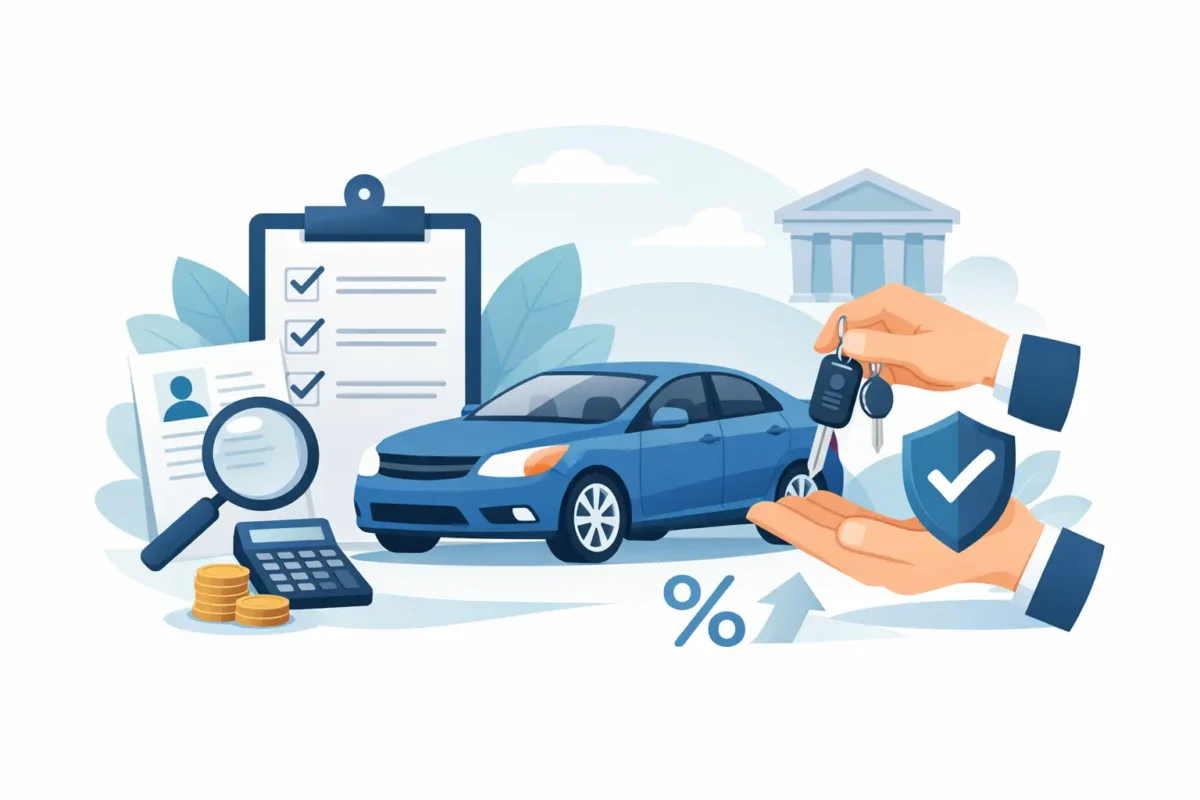
If your car payment feels too high every month, the next question is usually simple: can you actually qualify to refinance? Car refinance eligibility requirements are not mysterious, but they do vary by lender. In most cases, approval comes down to a mix of your credit profile, your current loan, your vehicle, and whether the new loan makes financial sense.
The good news is that many drivers assume they will not qualify when they actually might. Refinancing is often less about having perfect credit and more about meeting a lender’s basic guidelines while showing enough stability to support the new loan.
What lenders look at first
When lenders review car refinance eligibility requirements, they are trying to answer one main question: is this a loan they can reasonably approve at terms that work for both sides? That means they are not only looking at your credit score. They are also reviewing your income, payment history, vehicle details, and the balance left on your current loan.
A borrower with average credit but steady income and a solid payment record may look stronger than someone with a higher score and recent late payments. In the same way, a vehicle with reasonable mileage and value may be easier to refinance than an older car with a loan balance that is too high.
That is why refinancing is rarely a one-factor decision. It is a full picture review.
Common car refinance eligibility requirements
Most lenders start with a few baseline standards. Your current auto loan usually needs to be in good standing, and your vehicle must meet age and mileage limits. You also generally need enough income to support the new payment and other monthly obligations.
Here are the areas that matter most.
Your credit profile
Credit matters because it helps lenders estimate risk. A higher score can improve your chances of getting a lower interest rate, but lower scores do not automatically rule you out. Many refinance lenders work with a range of credit profiles.
What matters just as much is your recent history. If you have made on-time payments for the last 6 to 12 months, that can help your application. If you have recent delinquencies, repossessions, or a bankruptcy, approval may be harder, or the offered rate may not deliver meaningful savings.
Your income and ability to repay
Lenders want to see that you have enough income to handle your monthly bills, including the refinanced car loan. This does not always mean a high salary. It means your income should be stable and sufficient compared with your debt obligations.
If your debt-to-income ratio is stretched, refinancing may still be possible, but the deal has to work. Sometimes a longer term can lower the payment enough to make the approval more realistic. The trade-off is that extending the loan may increase the total interest paid over time.
Your current auto loan status
A refinance lender will review the loan you already have. If you are behind on payments, options may be limited. Many lenders prefer accounts that are current, with a recent history of on-time payments.
They also look at the remaining balance. If the balance is very low, refinancing may not be worthwhile. If it is too high relative to the car’s value, that can also create challenges.
Your vehicle’s age, mileage, and value
The car itself plays a major role in eligibility. Many lenders set limits on model year, mileage, and overall condition. A newer vehicle with moderate mileage is generally easier to refinance than an older car with heavy wear.
Value matters because the vehicle secures the loan. If your car is worth less than what you owe by a wide margin, some lenders may decline the application. Others may still consider it, depending on the amount of negative equity and the rest of your profile.
Your loan-to-value ratio
This is one of the most important numbers in auto refinancing. It compares what you owe to what the car is worth. If you owe $20,000 on a car worth $18,000, your loan-to-value ratio is higher than ideal.
A high ratio does not always make refinancing impossible, but it can limit your options. Lenders want to avoid financing more than the vehicle can reasonably support.
Why some applications get denied
Most denials happen for a handful of practical reasons. The borrower may have too many recent late payments, the vehicle may be too old, the mileage may be too high, or the loan balance may not fit the lender’s guidelines.
Sometimes the issue is not that you are unqualified. It is that the refinance would not improve the situation enough. If the lender cannot offer better terms, lower risk, or a workable payment, the application may not move forward.
This is one reason speed matters. A quick online quote can help you see whether refinancing is likely to help before you spend too much time on paperwork.
How to improve your refinance chances
If you are close to qualifying but not quite there, a few changes can make a real difference.
Start with your payment history. Bringing your current loan current and making several on-time payments in a row can strengthen your application. If your credit card balances are high, paying some of them down may also improve your profile by lowering your overall debt load.
It also helps to gather accurate information before applying. Know your payoff amount, approximate vehicle mileage, monthly income, and employer details. Small errors can slow down the process or affect the lender’s review.
If your goal is a lower payment, be realistic about how that happens. You might get there through a lower rate, a longer term, or both. The best option depends on whether you want immediate monthly relief, lower total interest, or a balance between the two.
When refinancing makes the most sense
Refinancing is often a smart move when your credit has improved since you first got the loan, interest rates available to you are better, or you need to reduce monthly pressure in your budget.
It can also make sense if your original loan came from a dealership and carried a high rate. Many borrowers accept the first financing available when they buy a car, especially if they need the vehicle quickly. Refinancing later can be a second chance to get terms that better fit your finances.
That said, refinancing is not always the right answer. If your car is nearly paid off, lender fees or a new term may reduce the benefit. If extending the loan keeps you in debt much longer, the lower payment may come at a higher long-term cost.
Car refinance eligibility requirements by lender
Not every lender uses the same standards. One company may be comfortable with higher mileage vehicles, while another may focus on newer cars. One may work with a broader credit range, while another may reserve its best offers for borrowers with stronger scores.
That is why comparing options matters. A lender with a fast, simple application process can give you a clearer picture of what is possible without adding unnecessary stress. For many drivers, that is the difference between putting off refinancing and actually taking action.
OpenRoad Lending is one example of a lender built around that convenience, with an online process designed to help qualified borrowers check for savings quickly and move forward with confidence.
What to have ready before you apply
A refinance application usually goes more smoothly when you have a few basics nearby. That includes your current lender information, loan payoff amount, vehicle identification number, mileage, proof of income, and driver’s license or state ID.
Having these details ready does not guarantee approval, but it helps speed up the review. It also reduces the chance of delays caused by missing information.
The bottom line on eligibility
Car refinance eligibility requirements are usually more practical than people expect. Lenders want to see a vehicle that fits their guidelines, a loan that makes sense to refinance, and a borrower with the ability to repay. Perfect credit is not always required, but a stable financial picture helps.
If your current loan is costing too much each month, checking your options can be a smart next step. Even a modest rate reduction or payment drop can free up room in your budget, and that kind of breathing room can make a real difference.