
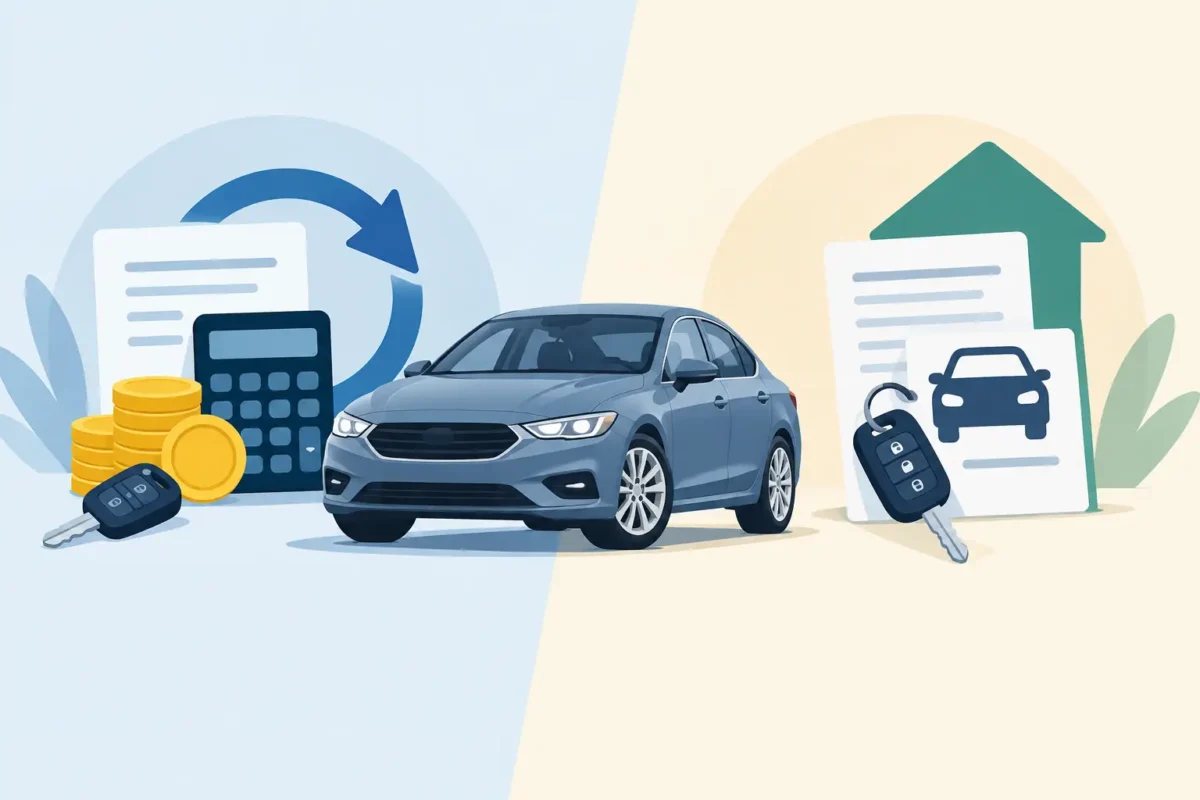
A lease-end notice can make a familiar car feel suddenly complicated. You may have a purchase option, a payoff amount, a monthly payment you want to lower, and a deadline approaching – all at once. The right choice in an auto refinance versus lease buyout decision depends on one key question: Do you already own the vehicle, or are you deciding whether to buy it?
That distinction changes everything. Refinancing can help an owner replace an existing auto loan with a new one that may offer a lower payment, a better rate, or terms that better fit the household budget. A lease buyout is the process of purchasing a vehicle you have been leasing. You may finance that purchase, but it is not the same as refinancing a loan you already have.
Auto Refinance Versus Lease Buyout: The Core Difference
Auto refinancing applies to a vehicle you own and currently finance. A new lender pays off the balance on your existing auto loan, and you begin making payments on the new loan. Depending on your credit profile, current interest rates, loan balance, and chosen term, refinancing may reduce your monthly payment or interest rate.
A lease buyout happens when you purchase your leased vehicle instead of returning it at the end of the lease. Your lease agreement generally lists a purchase-option price, often called the residual value. To buy the car, you pay that amount plus any applicable taxes, title and registration costs, and potential purchase fees. If you do not pay cash, you apply for financing to cover the buyout.
Put simply: a refinance changes the financing on a car you already own. A buyout turns a leased car into a car you own.
When a Lease Buyout Can Make Sense
Buying out a lease can be a practical move when the numbers and the vehicle both work in your favor. Start by comparing your lease purchase price with the vehicle’s current market value. If similar vehicles are selling for more than your buyout amount, purchasing the car may give you immediate value.
The car’s history matters, too. You know how it has been driven, maintained, and treated. If it has low mileage, is in good condition, and has been reliable, keeping it can feel less risky than shopping for an unfamiliar used vehicle.
A buyout may also help you avoid starting over with another lease or taking on the higher price of a replacement vehicle. For a household that needs dependable transportation and wants to keep monthly costs predictable, buying a familiar car can be the simpler path.
Still, do not assume a low residual value automatically makes the decision easy. Check whether the vehicle needs tires, brakes, scheduled maintenance, or repairs that may arrive soon after purchase. Review its warranty coverage and consider the expected cost of ownership once the lease is over.
Watch the Total Buyout Cost, Not Just the Residual Value
The purchase-option price is only one part of the calculation. Your actual out-of-pocket cost may include sales tax, a purchase-option fee, registration, title costs, and lender fees. Ask the leasing company for a written payoff quote and verify how long it remains valid.
Also look closely at the financing offer. A lower monthly payment can be helpful, but extending the loan term may increase the total interest you pay. The goal is not simply to get the smallest payment possible. It is to choose a payment and term that support your budget without creating unnecessary long-term cost.
When Auto Refinancing May Be the Better Move
Refinancing is worth considering when you already own your vehicle but your current loan no longer works as well as it should. Maybe your credit has improved since you bought the car. Maybe interest rates available to you are better than the rate on your current loan. Or maybe your payment is putting too much pressure on the rest of your monthly budget.
A refinance can give you the opportunity to adjust the loan. Choosing a lower rate may reduce interest costs. Choosing a longer repayment term may lower the monthly payment and create more breathing room, although it can mean paying more interest over time. In some situations, a shorter term may increase the monthly payment but help you pay off the vehicle sooner.
This option is generally strongest when the vehicle has enough value, the loan is in good standing, and the new terms provide a real financial benefit. Before moving forward, compare the new annual percentage rate, payment, term length, total finance charge, and any applicable fees with your current loan.
Refinancing Does Not Solve Every Loan Problem
Refinancing may not be the best fit if you owe much more than the vehicle is worth, if the vehicle is older or has very high mileage, or if the new offer does not improve your overall situation. A lower payment alone is not always a savings story if it comes from adding years to the loan.
The same principle applies after a lease buyout. Once you purchase and finance the vehicle, you may later have an opportunity to refinance that loan if your circumstances improve and the numbers make sense. But first, focus on whether buying the leased vehicle is a smart decision on its own.
How to Compare Your Options Before the Lease Ends
Give yourself time before the lease maturity date. Waiting until the final week can limit your ability to shop financing, review your agreement, and make a confident decision.
First, request the buyout quote from your leasing company. Then research the approximate market value of your exact vehicle, using its trim, mileage, condition, and local market. A vehicle with a favorable buyout price may be worth keeping. If the buyout price is higher than what comparable vehicles sell for, returning the car or considering another vehicle may make more sense.
Next, estimate the complete purchase cost, including taxes and fees. Compare that figure with what it would cost to replace the vehicle. Remember that returning the lease could bring disposition fees, excess-mileage charges, or wear-and-tear charges. Buying the car may eliminate some lease-end costs, though you should confirm the details in your agreement.
Finally, review your monthly cash flow honestly. Can you afford the payment, insurance, maintenance, and fuel without depending on a best-case month? A car payment should support your life, not make every unexpected expense harder to manage.
Questions to Ask a Lender About Buyout Financing
If you decide to purchase your leased car, ask whether the lender finances lease buyouts and what documentation is required. The process can differ from a standard refinance because the lender may need the lease payoff statement, vehicle information, and details about how the title will transfer.
Ask about the interest rate, APR, loan term, estimated payment, and whether there are origination or title-related fees. Find out whether the payment quoted includes optional products or whether those products are separate. Protection options such as GAP coverage or a vehicle service contract may be useful for some borrowers, but they should fit your needs and budget rather than being an automatic add-on.
It also helps to ask how quickly the lender can complete the transaction. Lease payoff quotes expire, and title processing can take time. Knowing the timeline reduces the chance of a stressful last-minute decision.
A Simple Decision Framework
Choose a lease buyout when the purchase price is competitive with the car’s market value, you like the vehicle’s condition and history, and the full cost fits your budget. Consider returning the lease when the buyout price is too high, the vehicle no longer meets your needs, or upcoming maintenance makes ownership less appealing.
Choose auto refinancing when you already own your car and a new loan could give you a payment, rate, or term that better supports your finances. OpenRoad Lending helps eligible vehicle owners explore refinancing options through a quick online process, so you can review a no-obligation quote before deciding whether a new loan makes sense.
The best next step is a practical one: pull out your lease agreement or current loan statement, write down the payoff amount, payment, rate, and term, and compare them with the vehicle’s real value and your monthly budget. Clear numbers turn a rushed car decision into one you can feel good about.