
Auto Refinance Versus Personal Loan: Which Fits?

Auto Refinance Versus Personal Loan: Which Fits?

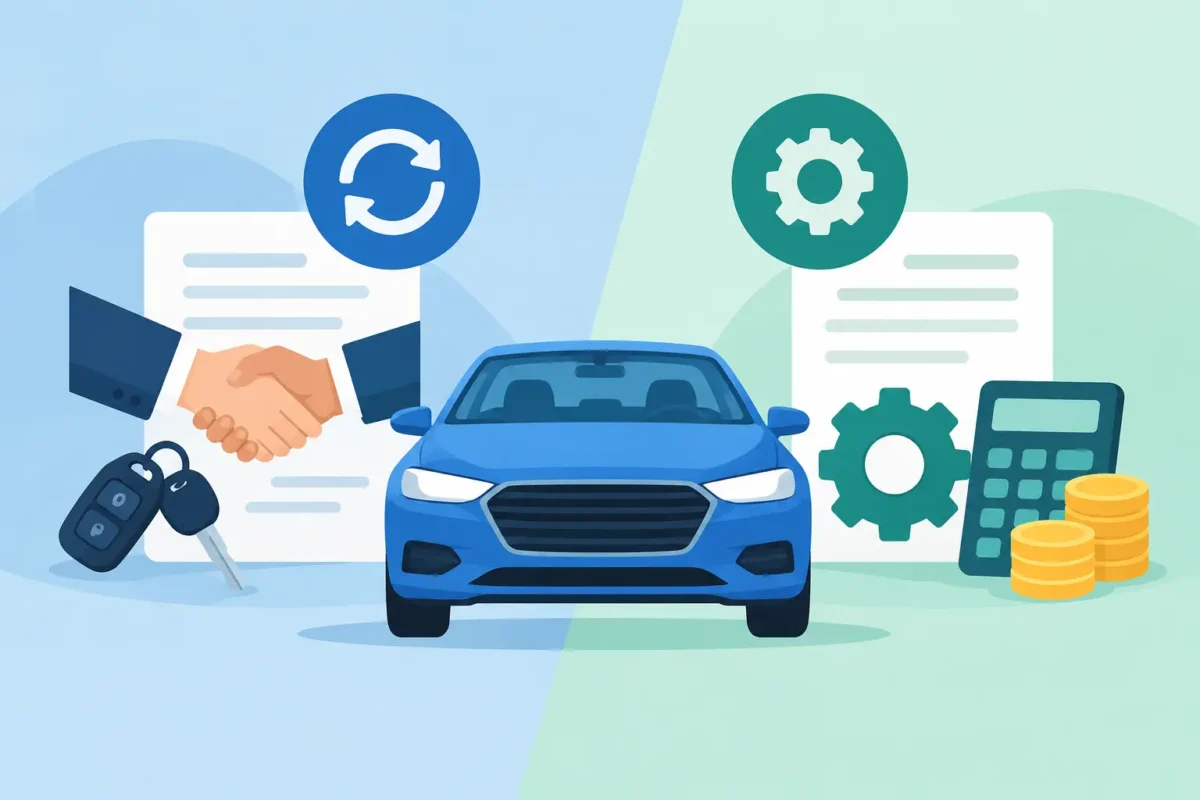
Your current car payment may be taking more out of your budget than it should. When you compare an auto refinance versus personal loan, the better choice usually comes down to one question: Are you trying to improve the loan on the vehicle you already own, or do you need flexible funds for another purpose?

Both options can affect your monthly cash flow and interest costs. But they work differently, come with different trade-offs, and may have very different approval requirements. Knowing where each option fits can help you avoid replacing one expensive payment with another.

Auto Refinance Versus Personal Loan: The Core Difference

Auto refinancing replaces your existing car loan with a new auto loan. The new lender pays off your current lender, and you begin making payments under the new rate, term, and monthly payment. Your vehicle serves as collateral for the loan.

A personal loan is typically unsecured, meaning you generally do not use your car or another asset as collateral. You receive a lump sum and can use it for many purposes, including debt consolidation, repairs, medical bills, or other major expenses. If you used a personal loan to pay off an auto loan, you would no longer have an auto loan, but you would still owe the personal lender.

That distinction matters because secured auto loans often have lower interest rates than unsecured personal loans for borrowers with similar credit profiles. A lender has the vehicle as security, which can reduce its risk. A personal loan gives you more flexibility, but that flexibility may cost more.

When Auto Refinancing May Make More Sense

Refinancing is built for borrowers who want to change the financing on a vehicle they already own. It can be worth exploring if your credit has improved since you bought the car, market rates have changed, or your original loan came with a high rate.

A lower annual percentage rate can reduce the total interest you pay, particularly if you refinance early in your loan term. You may also be able to lower your monthly payment by choosing a longer repayment term. That can free up room in a tight household budget, although it may increase the total interest paid over time.

For example, a driver who financed a vehicle when their credit was still recovering may now qualify for better terms after a year of on-time payments and lower credit card balances. Replacing the old loan with a lower-rate auto loan could create meaningful monthly savings without changing vehicles.

Auto refinancing can also provide a clearer, more focused solution than taking out a new unsecured loan. The new loan is tied to one purpose: paying off the existing vehicle loan. You are not borrowing extra money for unrelated expenses, which can make it easier to keep your financial plan on track.

There are limits, though. Lenders may have requirements for vehicle age, mileage, loan balance, loan-to-value ratio, income, and credit history. If your car is older, has high mileage, or is worth less than what you owe, your refinancing options may be narrower.

When a Personal Loan Could Be the Better Tool

A personal loan may make sense when your goal goes beyond your vehicle loan. Perhaps you need to consolidate several high-interest debts, cover a major expense, or simplify multiple monthly bills into one payment. Since personal loan proceeds can usually be used broadly, they can offer more flexibility than auto refinancing.

It may also appeal to borrowers who do not want their vehicle tied to a new loan. With an unsecured personal loan, the car is not collateral. However, missing payments can still seriously damage your credit and may lead to collections or legal action, so unsecured does not mean consequence-free.

A personal loan could be worth considering if the available rate is competitive and you have a clear repayment plan. Borrowers with strong credit may find attractive offers. For many car owners, however, the rate on a personal loan will be higher than the rate available through auto refinancing.

Using a personal loan to pay off a car note can also create a hidden budgeting problem. It may feel helpful to remove the lien from the title, but a higher rate or shorter term could leave you with a larger monthly payment. Always compare the full cost, not just the type of loan.

Compare the Numbers Before You Decide

The monthly payment gets attention because it affects your budget right away. It should not be the only number guiding your decision.

Start with the interest rate and APR. The APR can include certain lender fees, so it gives you a better view of the borrowing cost than the rate alone. Then compare the repayment term. A longer term can lower the payment, while a shorter term can help you pay less interest overall if you can comfortably afford it.

Review whether either loan includes origination fees, title fees, prepayment penalties, or other charges. Many loans do not have prepayment penalties, but you should verify the details in your current loan agreement and any new loan offer. A fee can reduce or erase the savings from a lower rate.

It also helps to compare the total amount you will pay from this point forward. Look at your remaining balance and the remaining payments on your existing loan. Then compare that figure with the total repayment amount on a refinance offer or personal loan offer. This keeps you from focusing only on a lower payment that extends debt for several additional years.

Your Vehicle and Credit Both Matter

With auto refinancing, lenders typically review the vehicle along with your financial profile. The car’s value, age, mileage, and condition can influence whether you qualify and what terms are available. Your payment history on the current loan matters too.

With a personal loan, approval is generally more dependent on your credit score, income, existing debts, and payment history. Because there is no vehicle collateral, a lender may set a higher rate or stricter qualification standards.

Neither option guarantees savings. If your credit has declined, your debt-to-income ratio has risen, or your vehicle no longer meets lender requirements, a new loan may not improve your situation. Getting quotes and reviewing the terms before committing lets you make a decision based on actual numbers rather than assumptions.

A Simple Way to Choose

If your main goal is lowering the cost or payment of the car you already financed, start by looking at auto refinancing. It is designed for that job and may offer a lower rate than an unsecured loan.

If you need funds for multiple expenses or want to consolidate debt beyond your vehicle, a personal loan may be more practical. Just make sure the flexibility is worth any increase in rate, fees, or monthly payment.

Ask yourself three practical questions: Will this loan lower my payment or total cost in a way that matters? Can I comfortably handle the new term? Does it solve the financial problem I actually have? Clear answers can prevent a rushed choice.

How to Prepare for an Auto Refinance Quote

Before applying, gather your current loan details, including the payoff amount, lender name, interest rate, monthly payment, and remaining term. Have your vehicle information ready as well, such as the year, make, model, mileage, and VIN. Reviewing your budget beforehand helps you decide whether you prioritize a lower payment, a shorter payoff timeline, or both.

You should also check your credit reports for errors and make sure your contact, employment, and income details are current. If you receive a refinance offer, read it carefully. Confirm the new APR, payment amount, loan term, and any fees before accepting.

OpenRoad Lending helps eligible vehicle owners explore refinancing options through a straightforward online process, with support available when questions come up. A quote gives you a concrete place to start: the chance to compare a new payment and term against the loan you have now.

The right financing choice should make your next payment feel more manageable, not add new uncertainty. If your current auto loan is stretching your budget, taking a few minutes to see whether refinancing could improve the terms may be a practical next step.

Read more
Fixed Versus Variable Auto Rates Explained

Fixed Versus Variable Auto Rates Explained

Your car payment should not come with a monthly guessing game. When comparing fixed versus variable auto rates, the key question is simple: do you want the certainty of one predictable payment, or are you comfortable with a rate that could change over time?

For most drivers refinancing an existing auto loan, predictability matters. A fixed rate can make it easier to budget for groceries, rent, insurance, and everything else competing for your paycheck. But variable rates may occasionally start lower, which can make them look appealing at first glance. Knowing how each option works helps you compare offers based on the total impact on your finances, not just the number that catches your eye.

What Is a Fixed Auto Loan Rate?

A fixed interest rate stays the same for the life of your loan. If your loan payment is $425 today, the principal-and-interest portion of that payment remains consistent each month, assuming your loan terms do not change.

That stability is why fixed-rate loans are common in auto financing. You know the annual percentage rate, or APR, when you sign the agreement, and you can estimate exactly how much interest you will pay if you keep the loan through its full term.

A fixed rate can be especially useful if you are working to lower your monthly payment through refinancing. Once you land a rate and term that fit your budget, you have a clear path forward. Rising market interest rates will not increase the rate on your existing fixed loan.

There is a trade-off. Fixed rates may sometimes begin slightly higher than an introductory variable rate. Still, the value of a fixed rate is not just the rate itself. It is the ability to plan around a payment that is not likely to move.

What Is a Variable Auto Loan Rate?

A variable rate can rise or fall during the loan term. It is typically tied to a published financial index, plus a margin set by the lender. If the index changes, your interest rate and payment may change as well.

Variable-rate auto loans are less common than fixed-rate loans, but they can appear through certain financial institutions or specialty lending programs. A variable rate may start below a comparable fixed rate, which can create lower initial payments. That initial savings is the main reason some borrowers consider one.

The risk is that a lower starting rate is not a promise of long-term savings. If market rates rise, your rate can increase. Depending on the loan agreement, your monthly payment could go up, more of each payment could go toward interest, or both. A rate adjustment can be particularly difficult when your household budget already has little room for surprises.

Before accepting a variable loan, read the terms closely. Ask how often the rate may adjust, which index it follows, whether there is a cap on rate increases, and how the lender will calculate your new payment. Those details matter more than a low introductory number.

Fixed Versus Variable Auto Rates: The Real Difference

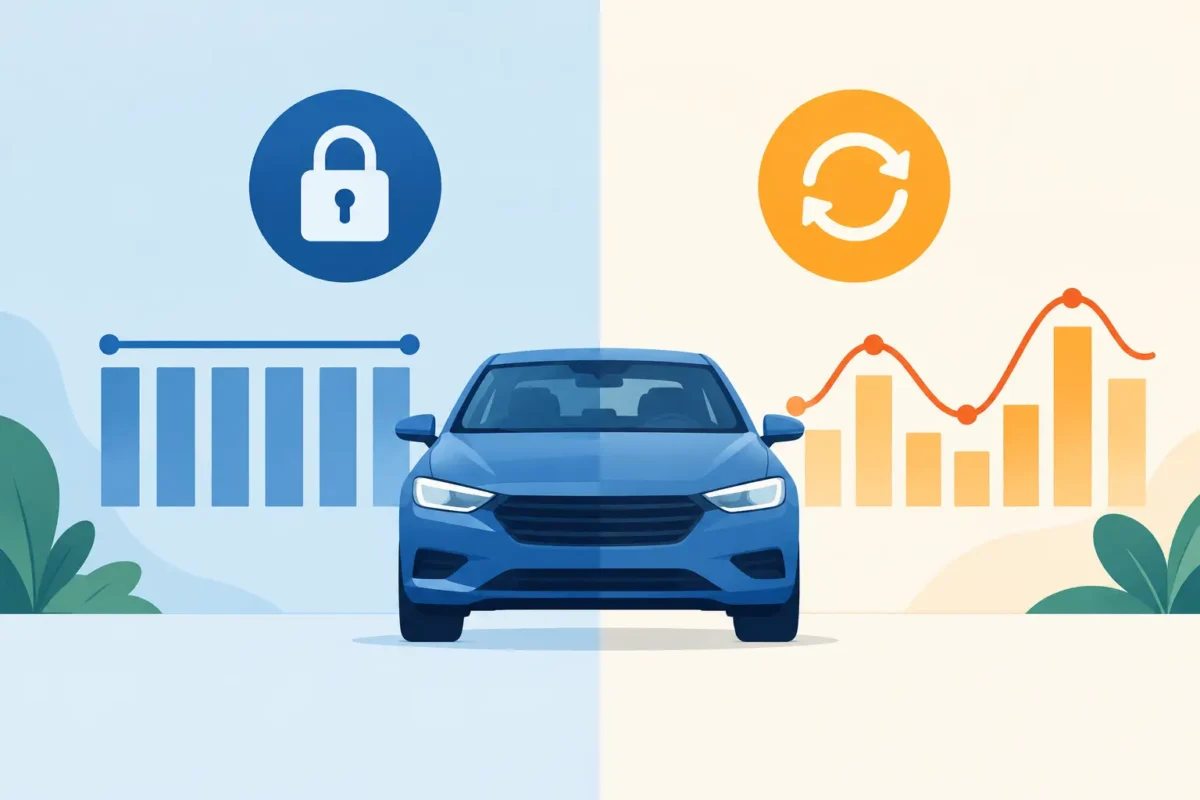
The difference comes down to certainty versus flexibility. A fixed rate gives you a stable APR and payment schedule. A variable rate gives you the possibility of a lower rate at the beginning, along with the possibility that your costs will increase later.

Neither option is automatically right for every borrower. Your choice depends on your financial priorities, how long you expect to keep the loan, and how much payment change you could realistically handle.

A fixed rate often makes sense when you want to know what your car will cost every month. It can be a strong fit for drivers with a tight budget, families managing several bills, or borrowers who plan to keep their refinance loan for years.

A variable rate may be worth considering only if you understand the adjustment rules and have enough financial flexibility to handle a higher payment. It may also be more attractive to someone who expects to pay off the loan very quickly, before a rate adjustment has much time to affect the total cost. Even then, compare the terms carefully instead of assuming the lower starting rate will save money.

Your APR Is Not the Only Number That Matters

When you refinance, focusing only on the advertised rate can lead to an incomplete comparison. Your payment and total loan cost are shaped by your APR, loan balance, repayment term, and any applicable fees.

For example, extending your repayment term can lower your monthly payment even if the interest rate does not drop much. That can create useful breathing room in your budget. But a longer term may also mean paying more total interest over time. On the other hand, a shorter term can help you pay the vehicle off faster, but it may raise your monthly payment.

The best refinance offer is the one that supports your actual goal. If your priority is immediate monthly savings, a longer term and competitive fixed APR may help. If you are trying to reduce total interest, a shorter term could be the better move if the payment still feels comfortable.

Compare offers using the same loan details

To make a fair comparison, look at each offer using the same remaining balance whenever possible. Then review the APR, monthly payment, number of payments remaining, total estimated interest, and any fees. If one lender quotes a lower payment, check whether it is because of a better rate, a longer term, or both.

Also consider your current loan. If your credit has improved since you financed your vehicle, or if market conditions have changed, refinancing could give you access to better terms than you received at the dealership.

When Refinancing With a Fixed Rate May Help

Refinancing may be worth exploring if your current rate feels high, your payment is straining your budget, or your financial profile has improved. A fixed-rate refinance can help replace uncertainty with a payment you can plan around.

You may want to get a refinance quote if you have been making on-time payments, paid down part of your existing balance, improved your credit, or found that your original loan term no longer fits your needs. You do not have to wait until your current loan becomes unmanageable. Comparing options early can give you more choices.

Keep in mind that refinancing restarts your loan with a new term. If you choose a longer term to lower your payment, make that decision intentionally. Lowering the monthly obligation can be valuable, especially when cash flow is tight, but it is smart to understand the total repayment picture before you finalize anything.

Questions to Ask Before You Choose

A clear loan offer should make it easy to understand what you are agreeing to. Before moving ahead, ask whether the rate is fixed or variable, whether the quoted APR includes applicable fees, and what your payment will be from the first month through the final payment.

If the rate is variable, ask what could cause it to change and how high it could go. If the rate is fixed, confirm that the rate will remain fixed for the entire loan term. You should also ask whether there is a prepayment penalty. Many borrowers like having the option to pay extra toward principal when their budget allows.

The right lender should give you room to review your options without pressure. OpenRoad Lending focuses on making the refinance process easier to understand, so you can evaluate a potential payment and term with your own financial goals in mind.

Choose the Payment You Can Live With

A car loan should support your life, not make every month harder to manage. Fixed versus variable auto rates is not just a technical finance question. It is a decision about how much certainty you want in your budget and how much risk you are willing to take for a potentially lower starting rate.

If a stable payment would help you feel more in control, a fixed-rate refinance may be the better fit. Take a few minutes to compare your current loan with available refinance terms, then choose the option that gives your budget more room to move.

Read more
Can You Refinance Before First Payment?

Can You Refinance Before First Payment?

Your first auto loan statement may not have arrived yet, but the payment already feels too high. Maybe the dealer-arranged financing came with a rate you did not expect, or you have since found that a lower payment would give your budget more breathing room. It is possible to refinance before first payment, but timing, lender rules, and the details of your current loan all matter.

Moving quickly can make sense when the new loan offers a meaningful improvement. Still, refinancing is not automatically the right move just because a better rate appears. The goal is to find a loan that supports your monthly budget and your long-term borrowing costs without creating avoidable delays or fees.

Can You Refinance Before First Payment?

In many cases, yes. Some auto refinance lenders will consider an application soon after you purchase your vehicle, even before your first scheduled payment is due. Other lenders require your existing loan to be open for a certain period, such as 30, 60, or 90 days. Policies vary, so an early refinance depends on the lender you choose and whether your current lienholder can provide the information needed to complete the payoff.

Your new lender generally needs to verify the existing loan, vehicle, borrower information, and payoff amount. Right after a purchase, your original lender may still be processing the account. The lien may not yet appear in all systems, and the account number or final payoff information may not be available immediately. That administrative timing is often the biggest hurdle, not your ability to qualify.

A refinance application also does not erase your responsibility for the original loan until the payoff is complete. If your first payment comes due while the refinance is being finalized, make that payment on time unless your current lender confirms otherwise. A missed payment can hurt your credit and create extra stress during a process meant to improve your finances.

When Early Auto Loan Refinancing May Make Sense

Refinancing early may be worth considering if your dealer financing was a temporary solution rather than your best available option. Dealerships can make buying a vehicle more convenient, but the financing offer you accepted may not be the most competitive loan available to you.

You may also be in a better position than when you applied at the dealership. Perhaps you had limited time to shop rates, made a larger down payment than expected, paid down another debt, or corrected an error on your credit report. Even a modest rate reduction can help, especially when combined with a loan term that better fits your payment goals.

The monthly payment matters, but it should not be the only number you compare. Extending your repayment term can lower the payment while increasing the total interest you pay over time. A lower rate with a similar or shorter term can be especially valuable, but the best choice depends on your cash flow, vehicle value, remaining balance, and how long you plan to keep the car.

A quick example

Suppose you financed a vehicle at a rate that leaves you with a $620 monthly payment. A refinance offer could lower that payment by reducing the interest rate, extending the term, or both. Lowering the payment can provide real relief, but review the new payoff date and total finance charge before deciding. Saving $75 a month is helpful. Paying substantially more interest over several additional years may not be.

What Lenders Look At Before Your First Payment

Applying early does not mean lenders skip the standard refinance review. They still evaluate whether the loan and vehicle meet their guidelines. Your credit profile, income, debt obligations, loan balance, vehicle age and mileage, and payment history can all play a role.

Because a brand-new loan may not yet show a payment history, lenders may focus more closely on your overall credit and the vehicle’s value compared with the amount you owe. If you rolled taxes, warranties, negative equity from a previous vehicle, or other costs into the loan, the balance may be high relative to the car’s current value. That can limit refinance options, particularly right after purchase when depreciation may occur quickly.

Your loan documents can help you prepare. Have your current lender’s name, account number, vehicle identification number, current balance, loan term, rate, and payment amount available. If you have not received your first statement, your retail installment contract may contain much of this information. The lender processing your refinance may request additional documentation to confirm the final payoff.

Watch for These Early Refinance Trade-Offs

A new rate can look appealing, but read the terms carefully. Start by checking whether your current loan includes a prepayment penalty. These are less common on auto loans than they once were, but you should confirm before moving forward. If there is a penalty, compare it with the savings you expect from refinancing.

Also look for fees on the new loan, including title transfer or state-related charges where applicable. Ask how the lender handles any optional products added to the original financing, such as a vehicle service contract, GAP coverage, or other protection products. Depending on the product and its terms, you may have options to keep coverage, cancel it, or receive a refund of any eligible unused portion. Do not assume refinancing automatically cancels or transfers coverage.

Finally, be realistic about how much time has passed. If your original lender has not set up the account yet, applying immediately may lead to a delay or a declined application based solely on account seasoning requirements. Waiting a few weeks may give the original loan time to become fully active and make the refinance process easier.

How to Refinance Before Your First Payment Without Missing a Beat

Start with the numbers you have. Review your purchase contract and identify your current annual percentage rate, monthly payment, remaining term, and approximate financed amount. Then decide what improvement matters most to you: a lower payment, a lower rate, a shorter payoff timeline, or a better balance among all three.

Next, get a refinance quote from a lender that works with your vehicle and loan situation. A reputable lender should make the terms clear enough for you to compare the proposed payment, rate, term, and estimated total cost. OpenRoad Lending helps eligible drivers explore auto refinance options through a straightforward online process, with support available when questions come up.

Once approved, follow the new lender’s instructions and keep your original loan current. Do not cancel automatic payments or assume your old lender has been paid off until you receive confirmation. After the payoff posts, verify that the original account shows a zero balance and that your title and insurance information are updated if needed.

Questions to Ask Before You Accept

Before signing a new loan agreement, make sure you can answer a few practical questions. What will the new monthly payment be? How many months will you be paying? What is the APR? Is there a prepayment penalty or any refinance-related fee? How soon can the new lender pay off the original loan?

You should also ask whether the first payment on the new loan will be due before or after the original loan’s next due date. Understanding that timing helps you avoid the most common early-refinance mistake: thinking one loan payment replaces the other before the payoff has actually occurred.

A Better Payment Can Start Sooner Than You Think

You do not have to wait until months of payments have passed to see whether your auto loan still works for your budget. If your current rate or payment feels out of step with your needs, an early refinance quote can show you what may be possible. Just keep the original account current, compare the full loan terms, and choose the option that gives you useful savings without stretching your repayment timeline farther than you want.

Read more
Car Refinance vs Loan Modification Compared

Car Refinance vs Loan Modification Compared

Your car payment is due, your budget is tight, and you need a realistic way to create breathing room. When comparing car refinance vs loan modification, the difference comes down to whether you qualify for a new loan with better terms or need your current lender to adjust the loan you already have.

Both options can lower a monthly payment, but they work very differently. The right choice depends on your credit, payment history, financial situation, and how quickly you need help.

Car Refinance vs Loan Modification: The Key Difference

A car refinance replaces your existing auto loan with a new loan. The new lender pays off the old balance, and you begin making payments under the new loan terms. If you qualify for a lower interest rate, a longer repayment term, or both, refinancing may reduce your monthly payment and potentially your overall borrowing costs.

A loan modification changes the terms of your existing loan through your current lender or servicer. It is typically a hardship option for borrowers who are struggling to make payments and may be at risk of falling behind. Your lender might extend the loan term, reduce the payment for a temporary period, or move missed payments to the end of the loan.

The simplest way to think about it is this: refinancing gives you a chance to shop for a better loan. A modification asks your current lender for relief because your existing loan is no longer manageable.

When Car Refinancing May Make Sense

Refinancing is often worth considering when your finances or credit profile have improved since you bought your vehicle. Maybe you accepted a high rate because you needed transportation quickly, or perhaps market rates have changed since you signed your original contract.

A refinance may be a good fit if you are current on your payments, have a vehicle that meets lender requirements, and can qualify for more favorable terms. Even if your interest rate does not drop significantly, extending the repayment period may lower your required monthly payment. That can free up cash for groceries, housing, insurance, or an emergency fund.

There is a trade-off. A longer term can reduce the payment but may increase the total interest you pay over the life of the loan. That is why it helps to look at both numbers: the monthly payment you need now and the total cost of the new loan.

For example, a borrower with a $500 monthly payment may refinance into a new loan with a $420 payment. The savings can make a real difference in a monthly budget. But if the new loan lasts longer, the borrower should understand how that affects total interest before accepting an offer.

Refinancing also gives you more choice. You can compare offers, loan terms, and payment amounts rather than relying only on the lender that currently holds your loan. At OpenRoad Lending, eligible drivers can explore refinancing options online and receive a no-obligation quote, helping them see whether a lower payment may be available before making a decision.

When a Loan Modification May Be the Better Move

A loan modification may be more appropriate if you are facing a short-term or serious financial hardship and cannot qualify for refinancing. Job loss, reduced work hours, unexpected medical expenses, or a major household change can make an otherwise reasonable car payment impossible to manage.

If you are already behind on payments or expect to miss one soon, contact your current lender as early as possible. Waiting until the account is severely delinquent can limit your options and increase the risk of repossession.

Modification programs vary by lender. Some may offer a temporary payment reduction. Others may extend the loan term, defer one or more payments, or add past-due amounts to the end of the loan. You will need to ask exactly how the arrangement changes your due date, payment amount, interest charges, and final payoff date.

A modification can provide needed short-term relief, but it is not automatically a less expensive solution. When payments are deferred or the term is extended, interest may continue to accrue depending on the agreement. In some cases, you may pay more over time even though the monthly payment becomes easier to handle.

Compare the Costs, Not Just the Payment

A lower payment is valuable, especially when your budget is stretched. But it should not be the only number you consider. Before agreeing to refinance or modify your loan, review the full picture.

With refinancing, ask about the interest rate, annual percentage rate, loan term, estimated monthly payment, and total amount you will repay. Also ask whether there are fees and whether your current loan has a prepayment penalty. Many auto loans do not have one, but checking your contract prevents surprises.

With a modification, get the proposed terms in writing. Find out whether missed payments are forgiven, deferred, or added back into the balance. Confirm whether your interest rate changes, how long the modified payment lasts, and what happens if you miss a payment under the new arrangement.

The best option is not always the one with the lowest payment. It is the option that helps you keep your vehicle, stay on track financially, and avoid creating a larger problem later.

How Credit and Payment History Can Affect Your Options

Your credit matters most when you refinance because lenders use it to help determine your eligibility and rate. A stronger credit profile, steady income, and a record of on-time payments can improve your chance of receiving favorable terms.

That does not mean refinancing is only for borrowers with perfect credit. Many drivers refinance because they want a more manageable payment, not because they have flawless credit. The key is to compare any offer against your current loan and make sure the new terms truly improve your situation.

Loan modifications are generally based more heavily on hardship and your lender’s policies. Still, your payment history can influence the options available. A lender may ask for proof of income, bank statements, or documentation showing why you need assistance.

Neither path should be treated casually. Missed payments, repossession activity, and certain hardship arrangements can affect your credit, depending on how your lender reports the account. Ask your lender how a modification will be reported, and keep records of every conversation and agreement.

A Practical Way to Choose

Start with your current position. If you are making payments but feel stuck with a high rate or payment, refinancing is usually the first option to explore. It may give you a lower payment, a better rate, or a more workable term without needing to prove a financial hardship.

If you cannot make your next payment and refinancing is not realistic right now, call your existing lender immediately to discuss hardship assistance or a modification. Be direct about what you can afford. Do not agree to a payment plan that only postpones the problem for a month or two.

There are times when both options deserve a look. For instance, a borrower may request short-term relief from the current lender while also checking whether a refinance could create a longer-lasting payment reduction. Just be sure you understand the terms of any agreement before moving forward.

Questions to Ask Before You Decide

Before you refinance, ask: What will my new payment be? How much interest will I pay over the full term? Is the rate fixed? Are there any fees? How soon can the new loan pay off my existing balance?

Before accepting a modification, ask: Is this change temporary or permanent? Will interest continue to accrue? Where do deferred payments go? Will the lender report the arrangement to credit bureaus? What happens if I cannot make the modified payment?

Clear answers help you make a decision based on facts, not pressure.

A car payment should support your life, not crowd out everything else in your budget. If you are current on your loan, checking refinance options may be a practical first step toward a lower payment and better terms. If hardship has made payments impossible, reaching out to your lender early can help you protect your transportation and give yourself room to recover.

Read more
Refinance Loan Modification for Auto Payments

Refinance Loan Modification for Auto Payments

A refinance loan modification may sound like one solution, but these are two very different ways to address an auto payment that no longer fits your budget. One replaces your current loan with a new one. The other changes parts of the loan you already have. Knowing which path applies can help you act sooner, protect your vehicle, and find more room in your monthly budget.

If your payment feels too high because of a steep interest rate, a short loan term, or improved credit since you bought your vehicle, refinancing may offer a practical way forward. If you are facing a temporary hardship and cannot make your current payment, a loan modification may be worth discussing with your existing lender.

Refinance vs. Loan Modification: The Key Difference

Auto loan refinancing means taking out a new loan to pay off your existing auto loan. Your new lender may offer a lower annual percentage rate, a different repayment term, or both. The goal is often a lower monthly payment, less interest paid over time, or a loan structure that better matches where you are financially today.

A loan modification happens with your current lender. Rather than issuing a new loan, the lender agrees to adjust certain terms of the one you already have. That could mean extending the repayment period, moving a past-due amount to the end of the loan, or offering a temporary payment arrangement. Modifications are generally intended for borrowers experiencing hardship, and approval is never automatic.

The best option depends on why your payment is a problem. Refinancing is usually a better fit when you are current or close to current on payments and want better terms. Modification is more often a hardship tool when falling behind is the immediate concern.

When Auto Refinancing May Make Sense

Your original auto loan was based on your financial profile at the time you purchased the car. A lot can change after that. You may have improved your credit, paid down other debt, or simply realized that the interest rate and payment you accepted at the dealership are putting too much pressure on your household budget.

Refinancing can be worth exploring when a new rate or term creates a meaningful monthly savings. Even a modest drop in payment can help cover groceries, insurance, fuel, or an unexpected repair. A lower rate may also reduce the total interest you pay, especially if you keep a similar or shorter repayment term.

Extending the loan term is another common way to lower the monthly payment. It can provide immediate breathing room, but it comes with a trade-off: paying over a longer period may increase the total interest paid. Before accepting an offer, look at both the estimated monthly payment and the total cost of the new loan.

A refinance may be harder to qualify for if the vehicle is very old, has high mileage, is worth less than the amount you owe, or if your payment history has recent serious delinquencies. Still, getting a quote can clarify your options without committing you to a new loan.

A quick example of the trade-off

Suppose your current payment is $540 per month, and a refinance offer lowers it to $455 by extending the repayment period. That $85 difference could make a real difference each month. But if the new loan lasts longer, review the total amount paid before deciding.

On the other hand, a borrower who qualifies for a lower rate and keeps roughly the same remaining term may lower the payment while reducing interest costs. There is no one “best” refinance structure. The right choice is the one that supports your budget without creating a bigger problem later.

When a Loan Modification May Be the Better First Call

A loan modification is usually about preventing a short-term financial problem from becoming a missed-payment problem. If you have had a job interruption, medical expense, family emergency, or another temporary setback, contact your current lender as soon as possible. Waiting until several payments are overdue can limit your choices.

Ask whether the lender offers hardship assistance and what type of documentation it requires. Some lenders may consider a temporary payment reduction, a due-date change, a payment extension, or a plan that adds missed payments to the end of the loan. The exact terms matter. A lower payment today may mean more months of payments tomorrow.

Be clear about what you can realistically afford. Agreeing to a payment plan that still exceeds your budget can put you right back in the same position. Get the revised terms in writing, including how interest will be handled, when normal payments resume, and whether the arrangement affects your credit reporting.

A modification does not usually give you the fresh interest rate opportunity that refinancing can. It also may not be available if your lender does not offer hardship programs or if the loan does not meet its requirements. That is why it helps to understand both paths rather than assuming they are interchangeable.

How to Compare Your Options Before You Decide

Start with your current loan statement. Find your payoff amount, interest rate, monthly payment, remaining number of payments, and vehicle mileage. These details make it easier to evaluate a refinance offer and have a productive conversation with your current lender.

Then focus on the question that matters most: Is this a long-term payment issue or a short-term hardship? If your income is stable but the loan terms are expensive, refinancing may be the more durable answer. If your income disruption is temporary and you need immediate relief, a modification or hardship arrangement may help you stay current while you recover.

It is also smart to check your credit before applying. You do not need perfect credit to explore refinancing, but stronger credit may improve your chances of receiving more favorable terms. If your credit has improved since you financed your vehicle, that progress could work in your favor.

Finally, avoid comparing offers based on payment alone. Review the rate, length of the loan, estimated total interest, lender fees if any, and whether optional products are included. A clear offer should help you understand exactly what changes and what you will owe.

Steps to Take if You Want a Lower Car Payment

First, keep making your current payments if you can. A strong payment record can give you more flexibility when applying for refinancing and may help protect your credit. If you cannot make a payment, call your lender before the due date to ask about available assistance.

Next, gather your information and request a no-obligation refinance quote. Many borrowers find that the process is faster and simpler than they expect. At OpenRoad Lending, refinance specialists can help eligible vehicle owners review potential payment and term options, so they can make an informed decision without unnecessary pressure.

If you receive an offer, compare it with your current loan. Ask whether the lower payment comes from a better rate, a longer term, or both. There is nothing wrong with choosing a longer term when cash flow is the priority, as long as you understand the total-cost trade-off.

Protect Your Budget Before the Payment Becomes a Crisis

The right time to address an expensive auto loan is before it starts affecting every other bill. Refinancing can be a powerful option for drivers who want a lower payment or better loan terms. A loan modification can offer a temporary lifeline when a hardship makes the current payment impossible.

Take the option that matches your situation, read every term carefully, and choose a payment you can sustain. A few minutes spent reviewing your auto loan now could create more breathing room for the road ahead.

Read more
Refinance vs Paying Extra Principal - Which Saves?

Refinance vs Paying Extra Principal – Which Saves?

Your car payment may be one of the biggest fixed expenses in your monthly budget. When you have a little room to improve it, the question becomes refinance vs paying extra principal: should you seek a better loan, or send more money to the lender you already have?

Both moves can reduce the interest you pay. But they work differently. Refinancing can change your rate, payment, and loan term. Extra principal payments leave your existing loan in place and help you pay down the balance faster. The right choice depends on what you need most right now: monthly breathing room, lower total interest, or a faster path to owning your vehicle free and clear.

Refinance vs Paying Extra Principal: The Key Difference

Paying extra principal means adding money beyond your required payment and directing it toward the loan balance. Because interest on an auto loan is generally calculated from the remaining balance, reducing that balance early can reduce future interest charges. You keep the same interest rate and the same loan agreement, but you may finish paying the loan sooner.

Refinancing replaces your current auto loan with a new one. If you qualify for a lower rate, you may reduce interest costs. You can also choose a different repayment term. A longer term may lower the required monthly payment, while a shorter term may help you pay off the vehicle faster, though the monthly payment could rise.

The distinction is simple: extra principal accelerates the loan you have. Refinancing gives you an opportunity to reset the loan terms.

When Paying Extra Principal Can Make Sense

Extra principal is often a strong option when your current interest rate is already competitive and your required payment fits comfortably in your budget. In that situation, there may be little reason to replace the loan. Putting additional money toward principal lets you use available cash to shorten the payoff timeline.

For example, suppose your required payment is $450 and you can reliably afford $500. Applying that extra $50 to principal each month can reduce your balance more quickly. The earlier you do it, the more potential interest savings you may see because there are more future payments left for the lower balance to affect.

This approach also gives you flexibility. If an expensive month comes along, you can generally return to making your required payment. You are not locked into a higher monthly obligation just because you made extra payments in the past.

Before sending extra money, check your loan agreement or contact your lender. Confirm there is no prepayment penalty and ask how extra funds are applied. You want the additional amount credited to principal, not simply treated as an early payment for the next month. Keep records of your payments and review your balance periodically.

Extra principal may be less practical if you have no emergency savings, high-interest credit card debt, or a payment that is already putting pressure on your household budget. It is helpful to pay down a car loan faster, but not if doing so leaves you short on essentials or forces you to rely on more expensive debt later.

When Refinancing Your Auto Loan May Be Better

Refinancing may be worth exploring when your current rate is higher than rates you may qualify for today, your credit profile has improved, or your monthly payment no longer works for your budget. A refinance can be especially useful when the goal is immediate cash-flow relief.

A lower interest rate can reduce the cost of borrowing. If you select a longer term, the payment may drop further because the remaining balance is spread across more months. That can free up money for groceries, insurance, savings, or other priorities. The trade-off is that extending repayment can increase total interest over the life of the loan, even with a lower rate.

That does not mean a longer term is automatically a bad move. A lower required payment can create valuable flexibility during a tight financial period. If your new loan has no prepayment penalty, you may be able to make extra principal payments when your budget allows. This strategy can give you a lower minimum payment without preventing you from paying ahead in stronger months.

Refinancing can also make sense if you want to move from an unfavorable loan structure to terms that better match your plans. Maybe your original financing was arranged at the dealership when you needed a vehicle quickly. Since then, you may have built a stronger payment history, improved your credit, or simply gained a clearer picture of what payment works for your household.

OpenRoad Lending helps eligible vehicle owners explore refinance options through a streamlined online process, so you can review a no-obligation quote before deciding whether a new loan makes financial sense.

Compare More Than the Monthly Payment

A lower payment gets attention because you feel the difference right away. Still, it should not be the only number you compare. Review the new interest rate, the number of months left on the loan, the total amount financed, and the estimated total of payments.

Imagine you owe $18,000 on your current auto loan. Refinancing into a lower rate could reduce your payment and interest expense. But if the new term starts over for many more months, the lower payment alone may not tell the whole story. Look at how long you will be making payments and what the loan could cost if you only make the required amount.

Also compare the refinance offer with what would happen if you kept your current loan and made extra principal payments. If your existing rate is low and you can comfortably pay more each month, keeping the loan may produce a faster payoff without the need for a new application. If the payment is too high or the rate is costly, refinancing may offer the more meaningful improvement.

A Simple Way to Make the Decision

Start with your main goal. If reducing the required payment is urgent, refinancing is usually the option to evaluate first. Sending extra principal does not lower your contractual monthly payment, even though it can help you pay off the loan early.

If your payment is manageable and you want to minimize interest while becoming debt-free sooner, extra principal can be a straightforward choice. It works best when you can make consistent additions without draining your cash reserves.

If you want both flexibility and a potentially better rate, consider refinancing first and then making extra payments on the new loan when possible. Just be sure the numbers support the move. A refinance should be judged by its full terms, not only by the payment displayed at the top of the offer.

Your current loan stage matters, too. Extra payments tend to have more impact earlier in repayment, when the balance is higher. Refinancing may also be more compelling earlier if you can meaningfully improve your rate. If you are close to paying off your vehicle, the available savings from either option may be smaller, so compare carefully before taking action.

Questions to Ask Before You Choose

Ask your current lender for your payoff amount, not just the balance shown on your last statement. Then review your current interest rate, remaining term, monthly payment, and any prepayment policy. Those details provide the baseline for every comparison.

For a refinance offer, ask what rate and term you qualify for, whether there are any applicable fees, and how much you would pay over the full term if you made only the required payments. For extra principal, decide on an amount that fits your budget even when costs are higher than usual.

There is no prize for choosing the fastest payoff plan if it creates financial stress. The better choice is the one that supports your budget now while moving your loan in a healthier direction. A lower payment can provide needed relief, and a disciplined extra-payment strategy can shorten the road ahead. Choose the option that lets you keep moving forward with confidence.

Read more
Cosigner Loan Refinancing for Auto Loans

Cosigner Loan Refinancing for Auto Loans

A cosigner helped you get approved when you bought your vehicle. But months or years later, your finances may look different. Cosigner loan refinancing can be a practical way to pursue a better auto loan rate or payment while changing who is responsible for the loan.

For many drivers, the goal is simple: lower the monthly payment, reduce interest costs, or remove a family member or friend from the loan. Whether refinancing makes sense depends on your current credit, income, loan balance, vehicle value, and the new terms available to you.

What Is Cosigner Loan Refinancing?

Cosigner loan refinancing means replacing your current auto loan with a new loan that has different terms and, potentially, different borrowers. The new lender pays off the existing loan, and you begin making payments on the refinanced loan.

There are two common reasons to refinance a loan with a cosigner. The first is to refinance in your name alone, which can remove the cosigner’s financial obligation. The second is to keep or add a cosigner to help qualify for better terms if your credit or income does not yet meet the lender’s requirements on its own.

A refinance is not an automatic release of a cosigner. Your current lender may not simply remove someone from an existing contract. In most cases, you need to qualify for a new loan that pays off the old one. That is why reviewing your options before applying can save time and prevent surprises.

When Refinancing Without a Cosigner Can Make Sense

Refinancing in your name alone may be worth considering when your financial profile has improved since you first financed the vehicle. Maybe you have made every payment on time, paid down other debt, built credit history, or increased your income. Those changes can help you qualify independently.

Removing a cosigner can be especially meaningful when the original cosigner is a parent, spouse, former spouse, or close friend. Until the original loan is paid off or refinanced, late payments can affect both borrowers’ credit reports. A new loan in your name alone gives the cosigner a clear exit from that responsibility.

It can also make sense if your current interest rate is higher than rates you may qualify for now. A lower rate could reduce your payment or help you pay off the loan sooner. The best result depends on the full loan offer, not the interest rate alone.

For example, extending the repayment term can lower your required monthly payment, which may create more room in your budget. However, a longer term can also mean paying more total interest over time. If your priority is immediate cash-flow relief, that trade-off may be worthwhile. If your priority is paying less overall, a shorter term with a competitive rate may be a better fit.

When Keeping or Adding a Cosigner May Help

If your credit is still developing, a cosigner may improve your ability to qualify for refinancing. A qualified cosigner may help a lender see less risk, particularly when that person has established credit, stable income, and a strong payment history.

That does not mean a cosigner guarantees approval or the lowest possible rate. Lenders evaluate the entire application, including the vehicle, loan-to-value ratio, payment history, income, and credit information for the borrower and cosigner. Both people should understand the commitment before moving forward.

A cosigner is legally responsible for the loan if the primary borrower does not pay. Before adding someone, have a direct conversation about the payment amount, due date, insurance requirements, and what would happen if an unexpected expense makes a payment difficult. Clear expectations protect relationships as well as credit.

What Lenders Look At During Cosigner Loan Refinancing

Refinance requirements vary by lender, but most decisions come down to whether the new loan is affordable and whether the vehicle qualifies. Your credit profile matters, but it is only one part of the picture.

Lenders commonly review your payment history on the existing auto loan, current income, employment information, debt obligations, remaining loan balance, vehicle age, mileage, and estimated vehicle value. If you are applying without your cosigner, the lender will focus on whether you can comfortably handle the payment yourself.

Your loan balance compared with the vehicle’s value is particularly important. If you owe significantly more than the vehicle is worth, it may be harder to refinance or you may receive fewer term options. This situation can happen after rolling negative equity from a previous vehicle into the current loan or choosing a longer original loan term.

Before you apply, gather basic details: your current lender, payoff amount, account number, monthly payment, interest rate, vehicle identification number, mileage, and proof of income. Having accurate information ready can make the online application process faster and help you compare offers with confidence.

How to Compare a Refinance Offer

A lower payment gets attention for good reason, especially when household expenses are tight. Still, it should not be the only number you consider. Look at the annual percentage rate, loan term, total amount financed, and total of payments over the life of the new loan.

Also check whether the new payment date fits your pay schedule. A payment that is manageable in theory can still create stress if it arrives at the wrong time of the month. The right refinance loan should work with your real budget, not just look good on an approval screen.

If you are removing a cosigner, confirm that the new loan documents list only the borrower or borrowers you intend to be responsible. Do not assume the change is complete until the old loan has been paid off and you have confirmation that the prior account is closed or satisfied.

You should also ask about fees, if any, and check your existing loan agreement for a prepayment penalty. Many auto loans do not charge one, but it is smart to verify. Small details can affect how much you actually save.

Steps to Refinance an Auto Loan With a Cosigner

Start by reviewing your current loan and deciding what you want the new loan to accomplish. Are you trying to remove a cosigner, lower your payment, improve your rate, shorten the term, or a combination of these goals? A clear goal makes it easier to evaluate your choices.

Next, check your credit reports for errors and make sure your recent payment history is accurate. If you can, avoid taking on new debt before applying. Even a few months of on-time payments and a lower credit card balance may strengthen your refinance profile.

When you request a refinance quote, be honest about whether you want to apply alone or with a cosigner. If you are applying alone, use your own income and employment information. If a cosigner will remain on the new loan, they will generally need to provide their information and consent to a credit review as well.

Once you receive an offer, compare it against your current loan. If the payment and terms support your goals, complete the required documents promptly. After funding, keep making payments on your old loan until you know the payoff has been processed. This helps avoid an accidental late payment during the transition.

Common Questions About Cosigner Loan Refinancing

Can I remove a cosigner without refinancing?

Usually, no. Some lenders offer a cosigner release process, but many auto lenders require the loan to be refinanced or paid off before a cosigner can be removed. Contacting your current lender can clarify its policy, but refinancing is often the more direct path.

Will refinancing hurt my credit?

Applying for a refinance loan may result in a credit inquiry, and opening a new account can cause a temporary change in your credit profile. But making on-time payments on the new loan can support healthy credit habits over time. The potential savings and improved loan terms may outweigh a short-term impact for many borrowers.

Can I refinance if I have negative equity?

Possibly. Approval depends on how much you owe, the vehicle’s value, your credit, and the lender’s guidelines. If refinancing is not available yet, continuing to make on-time payments and reducing the balance may improve your options later.

Should I refinance to get a lower payment?

It depends on why the payment is lower. A better rate can reduce both your payment and interest costs. A longer term may reduce the payment while increasing the total interest paid. Review both the monthly relief and the long-term cost before deciding.

If your auto loan no longer fits your budget or your cosigner is ready to move on, take a few minutes to see what new terms may be available. A straightforward refinance quote can give you the information you need to make a confident next move.

Read more
Auto Refinance Factors That Can Change Your Payment

Auto Refinance Factors That Can Change Your Payment

A car payment that made sense two years ago can feel very different after rent, groceries, insurance, and other monthly costs rise. The good news is that auto refinance factors can work in your favor when your credit, income, or current loan situation has improved. Refinancing may help you lower your monthly payment, reduce your interest rate, or choose a loan term that better fits your budget.

Your results depend on more than one number. Lenders look at your complete refinance profile, the vehicle, and the details of the loan you have now. Knowing what affects an offer can help you decide whether it is worth applying for a no-obligation quote.

The Auto Refinance Factors Lenders Review

Your credit profile and recent payment history

Credit is one of the biggest factors in any auto refinance decision. A higher credit score can help you qualify for a lower annual percentage rate, or APR, because it may indicate a stronger history of managing credit. But a perfect score is not required to explore refinancing. Many drivers refinance because their credit has improved since they first financed their vehicle, even if it is still a work in progress.

Lenders also look beyond a score. On-time payments, the age of your credit accounts, credit utilization, recent credit applications, and outstanding debt can all shape the offer you receive. A pattern of on-time auto payments may be especially helpful because it shows how you have handled the loan you want to refinance.

If your credit has recently improved, refinancing could be worth a closer look. If it has declined or you have had recent late payments, approval and pricing may be less favorable. Every situation is different, so a quote is often the clearest way to see your options.

Your current interest rate and remaining loan balance

The rate on your existing loan matters because it sets the baseline. If you financed when rates were higher, had limited credit history, or accepted dealer-arranged financing without comparing options, you may be paying more interest than necessary. A lower refinance rate can reduce the total interest you pay, especially if you still have a meaningful balance and time left on the loan.

Your remaining balance matters, too. Refinancing is generally more practical when enough of the loan remains to make the potential savings worthwhile. If you are close to paying off your vehicle, even a lower rate may not create a large monthly difference. On the other hand, a loan with several years remaining may offer more room for savings.

Review your current statement before applying. Look for your payoff amount, interest rate, monthly payment, remaining term, and whether your current lender charges a prepayment penalty. Many auto loans do not have one, but it is smart to confirm.

The loan term you choose

A refinance can change your payment in two ways: by lowering your interest rate or by changing how long you have to repay the loan. Extending the term may lower the required monthly payment, which can create breathing room in a tight budget. That can be a meaningful benefit for households focused on cash flow.

The trade-off is that a longer term can increase the total amount of interest paid over time, even with a lower rate. A shorter term may help you pay off the vehicle faster and reduce total interest, but it can raise the monthly payment. The best choice depends on what you need most right now: a lower payment, a faster payoff, or a balance of both.

Do not focus on the payment alone. Compare the APR, term length, total of payments, and any fees so you understand the full cost of the new loan.

Your vehicle’s age, mileage, and value

Your vehicle is part of the refinance decision. Lenders commonly consider its age, mileage, condition, make, model, and estimated value. Newer vehicles with lower mileage may qualify more easily, but many used vehicles can also be eligible.

Vehicle value is especially relevant when compared with your loan payoff amount. This comparison is often called loan-to-value, or LTV. If you owe much more than the vehicle is worth, refinancing can be more challenging because the lender is taking on a loan secured by an asset with less value.

This does not automatically mean you are out of options. It does mean the available terms may differ from someone with more equity in their car. If you have rolled a previous loan balance, taxes, or optional products into your existing loan, your payoff may be higher than expected. Requesting a current payoff quote gives you a more accurate picture.

Income, employment, and monthly obligations

Lenders want to see that the new payment is manageable within your budget. Your income, employment status, and recurring debt obligations can affect approval and terms. Stable income can strengthen an application, while high monthly debt payments may limit how much flexibility a lender has.

Be ready to provide accurate income information. Include reliable earnings you can document, and avoid estimating too high just to qualify. A refinance should make your finances more comfortable, not add pressure to an already stretched budget.

When Refinancing May Make Sense

A refinance is not only for drivers with excellent credit. It may be worth considering when your financial situation has changed for the better or when your current loan no longer fits your needs. Common reasons include improved credit, a high current APR, a need for a lower monthly payment, or a desire to remove a co-borrower when eligible.

It can also make sense if you bought your vehicle during a stressful period and accepted the first financing option available. Life moves quickly. A loan that was the right answer at the dealership may not be the best answer now.

Still, refinancing is not always the right move. If your vehicle is near the end of its loan, your credit has worsened significantly, or the new term would add too much total interest, it may be better to keep your current loan. The goal is not simply a new payment. The goal is a loan that supports your financial priorities.

How to Prepare for a Refinance Quote

A few minutes of preparation can make the process easier. Have your current lender information, approximate payoff amount, monthly payment, vehicle details, income information, and driver’s license available. Check your credit report for errors before you apply, since inaccurate account details can affect your profile.

Then compare offers carefully. Ask what rate and payment you may qualify for, how long the loan will last, and whether the offer changes based on final verification. A fast online quote can give you a practical starting point without turning refinancing into a complicated project.

With OpenRoad Lending, eligible drivers can begin exploring refinance options online without providing a Social Security number at the initial quote stage. That can make it easier to see whether a better payment or rate may be within reach before moving forward.

Look Beyond the Monthly Payment

Lowering a payment can be valuable, particularly when it frees up money for essentials, savings, or other high-priority debt. But make sure the lower payment comes from terms you understand. A lower APR, a manageable term, and a payment that fits your life are stronger signs of a useful refinance than a payment reduction by itself.

Consider how long you plan to keep the vehicle as well. If you expect to sell or trade it soon, extending the term could leave you owing more than you want when it is time to move on. If you plan to keep it for years, a lower rate or a better payment structure may have a more lasting impact.

A refinance decision does not need to be complicated. Start with your current loan details, be clear about what you want to improve, and review the numbers before you commit. A quick quote could be the first practical step toward a car payment that gives your budget a little more room.

Read more

Auto Refinance – Save on Those Car Loan Payments

Embrace financial wellness with these four empowering steps to refinance your car loan:

Unlock Savings Instantly: Seize the opportunity to lower your monthly expenses by refinancing your car loan. Within minutes, you can navigate online to find a lender that aligns with your needs and apply to refinance your current loan. It’s a straightforward step towards financial freedom.

Research Made Easy: The internet revolutionizes the way we approach auto refinancing, providing a wealth of information at your fingertips. From exploring various loan options to using online calculators for instant estimates, everything you need to make an informed decision is readily available. This digital era ensures that valuable insights and tools are just a click away, making the process seamless and efficient.

Choosing a Trusted Lender: With the vast array of online resources, finding a reputable lender to refinance your auto loan is more accessible than ever. Conducting due diligence online allows you to sift through potential lenders, ensuring they are credible and that your personal information remains protected. This careful selection process is crucial for a secure and beneficial refinancing experience.

Start Saving Today: Many consumers are unaware of the significant savings possible through refinancing their auto loans. By taking a few minutes to apply with a lender specializing in auto refinancing, you could save hundreds, even thousands, over the life of your loan. This simple yet impactful action can lead to substantial financial benefits, making it a wise move for anyone looking to enhance their financial well-being.

Read more

Navigating Auto Loan Refinancing in 2024’s Promising Economic Climate

Introduction

As we look forward to 2024, the economic landscape is buzzing with possibilities and predictions. The Federal Reserve, although not explicit about specific interest rates, hints at a dynamic financial future. For consumers with an open auto trade, this signals a unique opportunity. In this blog, we delve into how these changes could be beneficial, especially if you’re considering refinancing your auto loan.


The Federal Reserve’s Indications and Economic Optimism

While specific interest rates for 2024 remain a subject of speculation, the Federal Reserve’s indications point towards a more stable and improving economy. This improvement is a beacon of hope for consumers looking to optimize their finances. What does this mean for you as an auto loan holder? Simply put, it could be the ideal time to reassess and potentially refinance your auto loan.


Refinancing Your Auto Loan: Why 2024 Might Be the Right Time

Refinancing an auto loan means replacing your current loan with a new one, usually with better terms. Given the potential economic upturn, 2024 presents an opportune moment for this. Benefits include:

  • Reduced Monthly Payments: With potentially lower rates or an extended loan term, your monthly payments could decrease, easing your financial burden.
  • Lower Interest Rates: Although not guaranteed, a positive economic shift could lead to lower interest rates, making refinancing a cost-effective choice.
  • Improved Loan Terms: Besides interest rates, other options, such as extending your existing loan term, could be an option to help you lower your current payment.


Love Your Car, Improve Your Loan

Your car is more than just a vehicle; it’s a part of your daily life. If you love your car but feel burdened by the high payment or unfavorable loan terms, 2024’s potential economic improvements could be your cue to act. Refinancing can help you keep the car you love with more manageable payment.


FAQs

Q: How do I know if refinancing my auto loan is the right decision? A: Consider factors like current payment, interest rate, remaining months or term on your loan, your credit score, and how long you plan to keep your car. An Auto Refinance Lender can provide personalized advice.

Q: What should I prepare for the refinancing process? A: Checking to see if you qualify is typically easy. To get the most accurate pre-approval, be sure to have your vehicle’s VIN and mileage when you apply.

Q: Are there any risks to refinancing my auto loan? A: While refinancing can offer many benefits, some lenders may charge application fees or penalties for early loan payoff. Evaluate these costs against the potential savings.


Closing Segment

As we embrace 2024 with optimism, it’s an excellent time for savvy consumers to reassess their financial commitments. The possibility of an improving economy, hinted at by the Federal Reserve, could open doors for beneficial changes to your auto loan. If you love your car but wish for better financial terms, exploring refinancing options is a forward-thinking move. Stay informed, evaluate your options, and you might just find that 2024 offers the perfect opportunity to optimize your auto loan, enhancing both your financial health and driving experience.

Remember, this is a forward-thinking perspective based on current economic trends and predictions. It’s always wise to consult with an Auto Refinance Lender for tailored advice based on your specific circumstances. Stay tuned and financially savvy as we navigate the promising year of 2024!

Read more